
Find Lincolnia Residents Through Fairfax
A Lincolnia residents directory search works best when the record type drives the plan. Start with the name or address you already have. A Fairfax County parcel settles the right jurisdiction. A deed ties a person to a dated transfer. Older directories can fill in a past address when current material runs thin. Lincolnia carries an Alexandria mailing label. The county record often matters more than the city on the envelope. You can even find who lives on a street in Lincolnia. Work from the parcel outward. Compare dates and identifiers across results. Then ask the custodian for the record itself when a formal answer is required.
- Check the address in Fairfax MAR or iCare, and retain the exact returned address and PIN.
- Open the parcel report for zoning, subdivision, plan context, deed references, and any publicly displayed owner or mailing field.
- Use the PIN, instrument number, or deed book and page with the Circuit Court land-records route.
- For a dated household question, compare a directory, tax book, newspaper index, or census entry with the address and year.
- When the record is not online, send a focused request to the custodian for an existing record, identifier, date span, and preferred format.
Note: A name match grows more dependable when the address, the time period, and the record role all agree.
Lincolnia Residents Records Offices
Fairfax and Virginia offices hold the records most used for Lincolnia resident research. The Department of Tax Administration ties a site to a parcel. The Circuit Court Clerk keeps land instruments plus the non-confidential Circuit case index. Elections maintains county administration. The state, meanwhile, runs the individual voter-information match. Treat the records office list as a set of access points, not interchangeable directories. For the full address-to-record sequence, see the Lincolnia by-street directory.
Fairfax Circuit Court Land Records
4110 Chain Bridge Road, Suite 317
Fairfax, VA 22030
703-691-7320
Land-records research room
Fairfax DTA and iCare
12000 Government Center Parkway
Fairfax, VA 22035
County online service
Fairfax County iCare
Fairfax Office of Elections
12000 Government Center Parkway, Suite 323
Fairfax, VA 22035
703-222-0776
Virginia Citizen Portal
The Circuit land-records room offers public terminals Monday through Friday, 8:00 a.m. to 4:00 p.m., with recording usually ending at 3:00 p.m. Hours, interfaces, and fees change. Check the state and county webpages before any visit.
Lincolnia Parcel Keys Before Names
Fairfax iCare lets a searcher work by address, map number, or map. The address form breaks out number, unit, street, and suffix fields. Leave the suffix blank to widen a search. The asterisk wildcard helps with a partial street term. The map-number route accepts whole or partial PINs. PIN stands for parcel identification number, a stable county key that usually beats a common name when joining maps, tax details, deeds, and permits for any Lincolnia property.
| iCare field | Use in a Lincolnia search | Limit |
|---|---|---|
| Number and street | Find a site address | Use a suffix or wildcard variation when needed. |
| Unit number | Refine an iCare address search | MAR does not include apartment units. |
| Map number / PIN | Join a parcel to county records | A partial PIN needs result verification. |
| Parcel report | Review zoning, deed links, tax year, and physical fields | An assessment record is not conclusive legal title. |
The iCare address-search screen shows the county’s number, unit, street, and suffix approach.
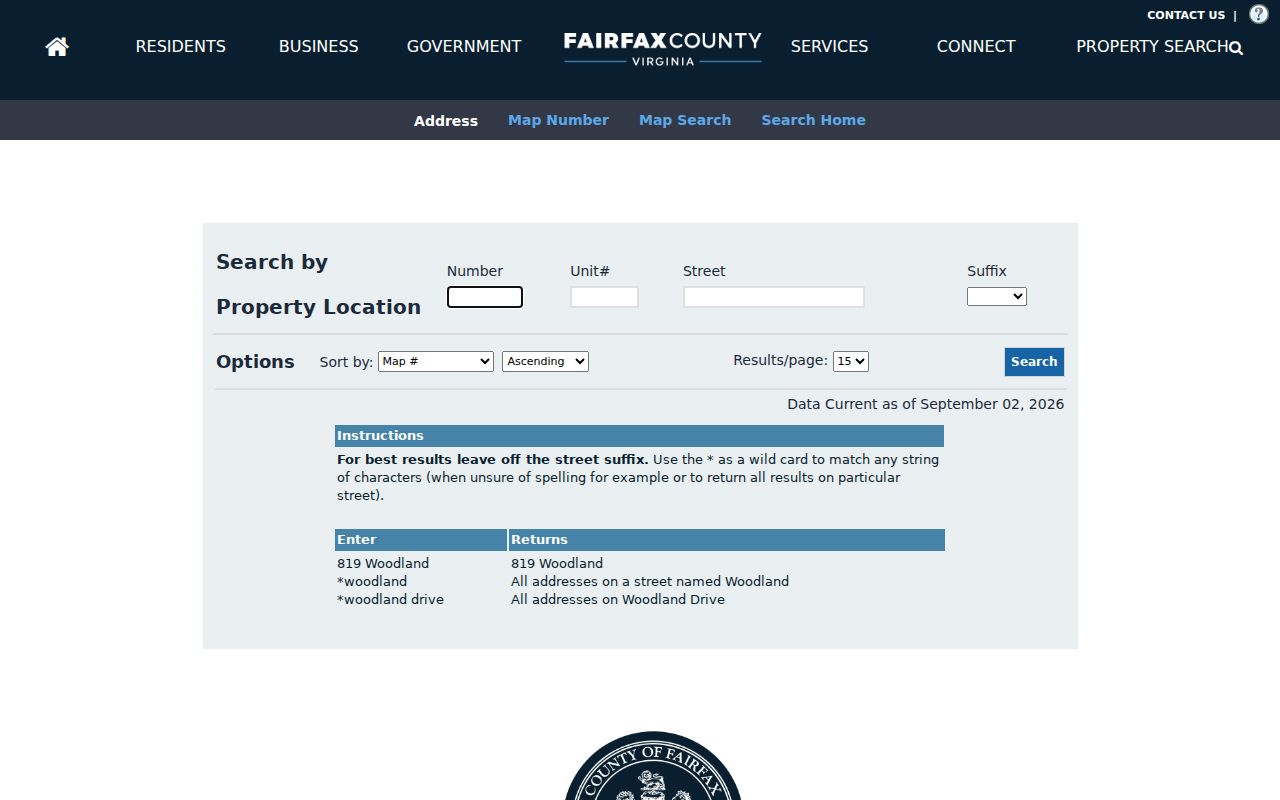
Those fields normalize a Lincolnia address before you compare a deed or a historical source. iCare values and sales data refresh twice weekly. Even so, the displayed tax year and assessment date still shape what the numbers mean.
- Parcel
- A defined unit of land used by the county for mapping and assessment.
- Index
- A finding tool that points to a record, rather than the full record itself.
- Roll
- A list or record series kept for one official purpose, such as assessment or voter administration.
- Criss-cross directory
- A reverse directory arranged by address instead of by surname.
Lincolnia Geography Needs Two Fields
Enter “Alexandria, VA 22312” when a postal form asks for the mailing city. Then verify the political jurisdiction separately as Fairfax County. Lincolnia’s planning area generally follows Little River Turnpike, Stutz Road, I-395, Indian Run Stream Valley, and Braddock Road. But a planning area, a Census Designated Place, a ZIP code area, a tax district, and a civic-association boundary are different overlays. A neighborhood name can sharpen a residents directory search. It is not a legal parcel description.
MAR serves as the county’s address, parcel, and street repository. It can search address, parcel, or street data. Filters cover city, ZIP, subdivision, and created or expired dates. View results as a table or map, or export them. MAR also offers current, historical, and all-status controls. It excludes the City of Alexandria, Falls Church, Arlington County, and apartment units. A missing result therefore calls for a jurisdiction check. It does not mean the county record failed.
Current Lincolnia Resident Directories
No single current Lincolnia residents directory lists every person in the community. Fairfax and Virginia records instead document separate roles. The parcel route may identify a site and an assessed owner field. A deed index names the parties to a recorded instrument. The voter portal is an authorized individual match. Court, business, and license systems may verify a distinct record role rather than a residence. Public fields can be withheld or restricted. So an absent field is not an invitation to reconstruct it elsewhere.
| Record route | What it can establish | Custodian | Access boundary |
|---|---|---|---|
| iCare and parcel report | Site parcel, assessment data, public owner or mailing field | Fairfax DTA/GIS | Suppression is possible; no occupancy proof. |
| Land-record index | Grantor, grantee, instrument, and legal-description trail | Fairfax Circuit Clerk | Images and access vary by route. |
| Voter information | Matched voter status, districts, polling place, and history | Virginia Elections | Identity-match fields and certification are required. |
| Court index | Non-confidential case parties and docket data | Fairfax courts | A case is not proof of residence or liability. |
| State business or license record | An entity or regulated-record role | SCC or DPOR | A business address is not a home address. |
When the question concerns one named person rather than an address, compare record roles and dates through the Lincolnia resident lookup route instead of treating a single result as final.
Lincolnia Voter Matching Has Limits
The Virginia Citizen Portal works nothing like a Lincolnia residents directory. It is a matching tool, not a list. To get a result, a searcher supplies the voter's full name, date of birth, the last four digits of a Social Security number, and the locality. A certification is required as well. Lincolnia lookups run through Fairfax County as the locality. Mailing addresses may still read Alexandria, so that label alone tells you little. An authorized match returns registration status, districts, a polling place, absentee status, and voting history. Nothing about a neighbor's household comes with it.
Virginia keeps no party registration. Public list products carry their own requester categories. Their permitted uses, field sets, and redactions are all defined by the state. Voters under protection can have residence details substituted or withheld entirely under Virginia law. A missing address in a public record is a legal shield, not a puzzle. The residents directory value of these rolls lies in confirming a participation event. It does not trace where someone lives now.
Note: Voting history records one participation event, never a household relationship or a current address.
Lincolnia Deed Trails Start at Circuit Court
Deed research in Lincolnia begins at the Fairfax Circuit Court Clerk. That office holds deeds, deeds of trust, liens, easements, plats, releases, and related land instruments. Coverage runs from 1742 straight through to the present. A parcel report often yields a deed book and page or an instrument number. Those numbers are the real keys to ordering a copy. CPAN sells subscribers deeper land, probate, marriage, trade-name, and case material. Courthouse terminals serve as the public fallback. Certified land-record copies cost $2 per document plus $0.50 per page. Mail requests require payment and a self-addressed stamped envelope.
Index entries deserve a slow read. An "And Being" clause can point back to an earlier deed in the chain. Asterisks often flag extra names. An easement may sit under a party you never expected. A current parcel card makes a strong lead. Use it for any street directory or resident lookup project. Still, only a recorded deed or a licensed survey settles a boundary dispute.
The Fairfax CPAN page lays out both the subscriber path and the courthouse alternative.
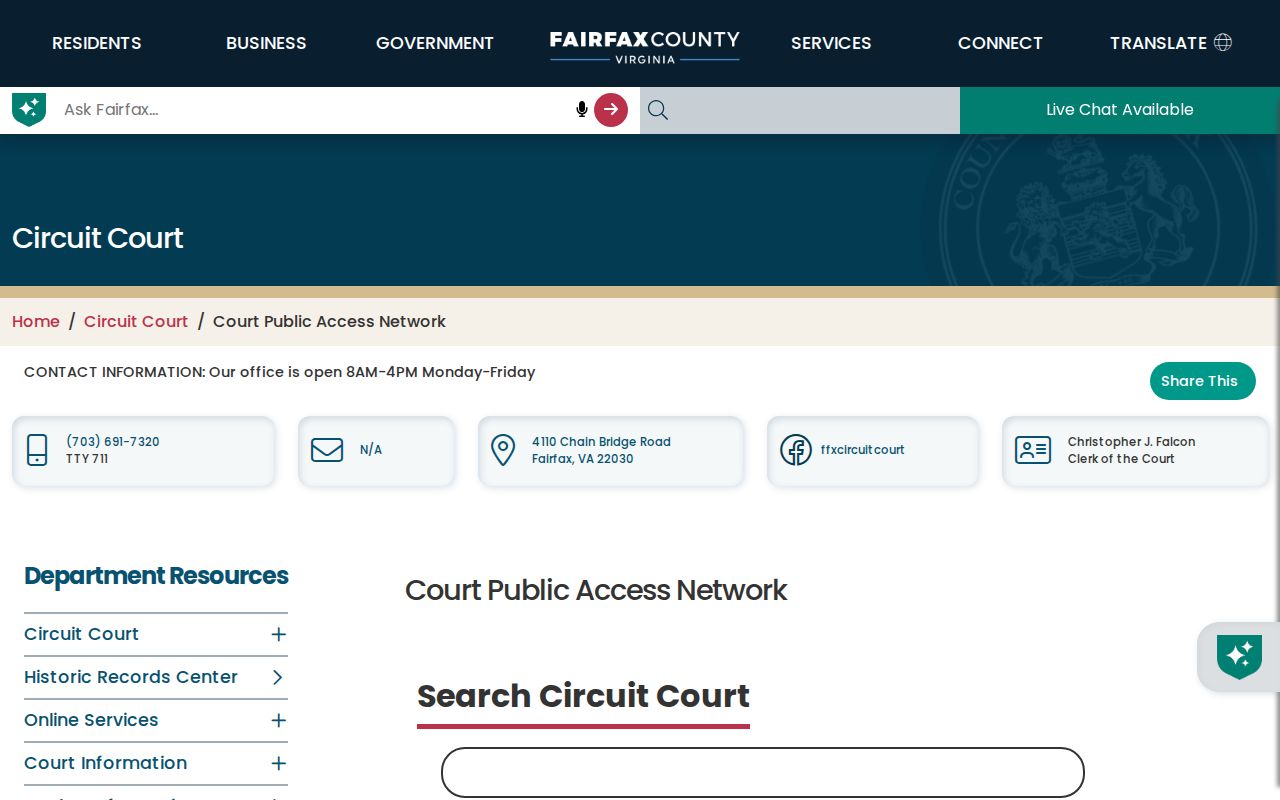
Pick the access option shown on the official page first. Then confirm whether your parcel search needs a public image, a research-room visit, or a formal copy request.
Lincolnia Requests Need Existing Records
Virginia's Freedom of Information Act, Va. Code § 2.2-3704, opens a door to county records that never made it online. The law covers records that already exist. Fairfax asks each requester to name the agency and describe the record with reasonable specificity. The agency then has five working days to produce the record or cite a withholding. It can report that nothing responsive exists. It can also explain why extra time applies. Charges stay limited to actual access, duplication, supply, and search costs.
Narrow requests beat broad ones every time. Build your request around a parcel PIN. Add a known date range, the agency, the document category, and your preferred electronic format. Asking for everything about a person tends to stall. Court files, vital records, and protected voter data operate under their own statutes. No general county request unlocks those. A well-aimed records office request, though, reaches deed, permit, and assessor material that portals skip.
The Fairfax VFOIA form collects the agency name and a description of the existing record.
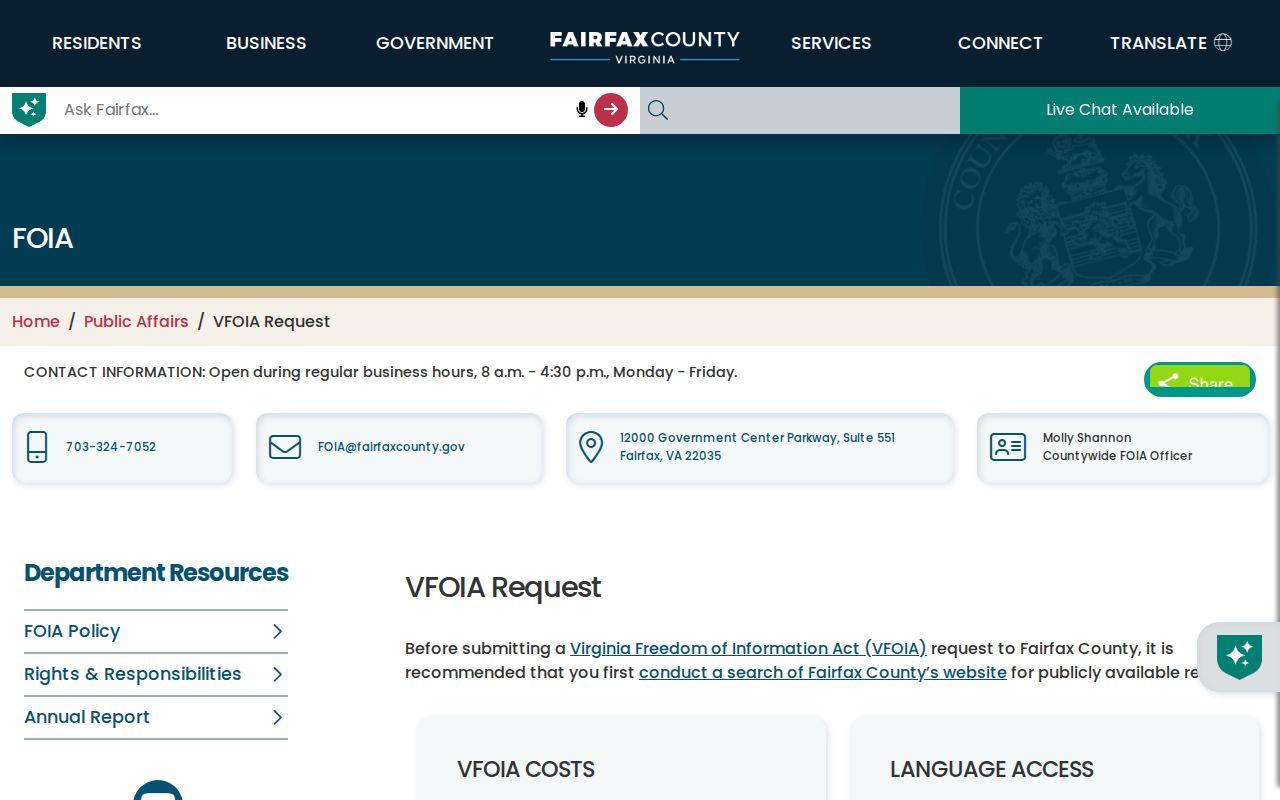
Treat the form as a fallback for a defined record missing from a portal. It cannot make an office assemble a private resident report.
Historical Lincolnia Resident Directories
Older Lincolnia residents directory volumes live at the Fairfax County Public Library Virginia Room. That shelf anchors the historical trail. Its guide lists Chataigne Fairfax County material for 1877, 1880, 1884, 1888, 1890, and 1897. Hill's volumes cover 1906 and 1911. Later telephone and neighborhood series follow. The Alexandria/Annandale/Lincolnia Neighborhood Telephone Directory survives in uneven holdings from 1978 through 2009. Every listing proves a publication happened on a date. It never licenses an old phone or address entry as current contact information.
Nearby leads help too. Hill's Alexandria suburban series spans 1966, 1968, 1969, 1971, 1972, and 1973. It often reaches Fairfax homes. City of Alexandria criss-cross volumes need an address and PIN check. That step comes before anyone ties them to a Fairfax parcel. For the shelf itself, its call-number gaps, and how to read an entry, see Lincolnia city directories.
Lincolnia Virginia Room Paper Trail
The Virginia Room sits on the second floor of City of Fairfax Regional Library. The address is 10360 North Street, Fairfax. Inside are directories, maps, newspapers, manuscripts, photographs, microform, local-organization files, and property-history resources. Hours run Monday through Wednesday, 10:00 a.m. to 9:00 p.m. Thursday and weekend hours run 10:00 a.m. to 6:00 p.m. Equipment includes a microform reader-printer, a CPAN station, and research stations. Check current alerts before making the trip.
The Fairfax property-history bibliography ties deeds to tax records, maps, directories, permits, newspapers, and archives. Pairing two dated source types beats trusting one old address or postal label. Federal census schedules stay public only through 1950. Any later family claim needs a different dated source. The Virginia Room usually holds one.
Lincolnia Park Adds a Dated Record
The Lincolnia Park Recreational Club history reads like a dated resident record in miniature. The Lincolnia Park Civic Association formed in 1956. It then negotiated a $15,000 purchase and planned 385 shares. Only 194 sold, and the club opened in summer 1957. Those figures give a Lincolnia researcher a firm organization name, a year, and a property event to chase through newspapers, plats, library files, or a city directory. Membership itself stays private.
Other plan-area names work the same way. Fairland, Indian Run Park, Little River Village, Lincolnia Mews, Morningside Towers, Strawbridge Square, Duke Street Station, Virginia Village, and Lincolnia Hills can unlock plan records, plats, meeting minutes, or a street directory held by a records office. Each source draws its own boundary. Confirm the exact coverage before deciding a location falls inside a named area.
Note: Civic association names make strong lookup keys, but private membership rolls sit beyond any ordinary residents directory or public-record search.
Lincolnia State Entity Records Differ
State record systems separate a business filing from a residential one. The Virginia SCC Clerk’s Information System searches by entity name or entity ID. It opens onto filing details. A registered agent address is a filing role. It proves nothing about where a person actually lives. UCC filings are financing notices too, not a current personal profile.
For licenses, the Virginia DPOR License Lookup takes a name, license number, address, or license type. It offers an advanced search. DPOR itself cautions that online data may lag and are not the agency’s public records. When accuracy matters, ask DPOR’s Public Records Section for an official copy. Do not trust a screen result alone.
The SCC entity-search entry is a state-held filing route.
An entity search can confirm the filing custodian and a record identifier. For any Lincolnia property question, though, the parcel and deed trail through the recorder and assessor remains the proper route.
The DPOR license-search screen provides a separate regulatory lookup.
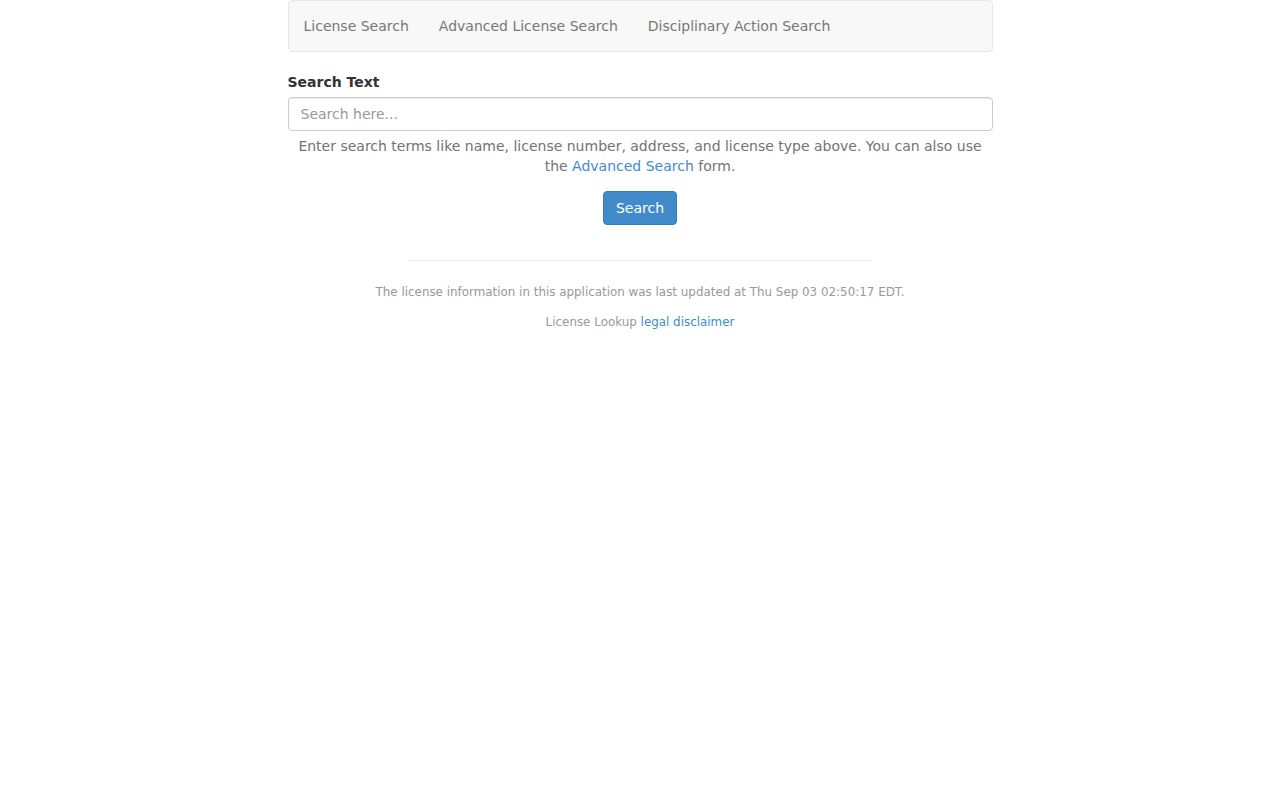
Its timestamp and agency disclaimer both carry a practical lesson. Note the date of each search, and verify any disputed detail with the records office that serves as custodian.
Lincolnia Official Channels Beat Scams
Anchor every Lincolnia records search to an official domain. That means Fairfax, Virginia Courts, VDH, Virginia Elections, SCC, DPOR, or the Library of Virginia. Fairfax has warned residents about fake court paperwork, phony tax letters, and fraudulent permit-payment instructions. Verify a court clerk or county office through its published phone number or domain. Never pay at an address from an unexpected letter. Never wire money because a caller threatens arrest. The same caution applies to fees for a record copy.
Compare the agency name, domain, record identifier, date, and payment route before trusting a result. The Fairfax Sheriff states plainly that it does not send court orders by text. Nor does it request payment by phone. A government portal is a starting point. It never replaces verifying an order, fee, or copy with the agency. That agency holds the record.